Reducing time to first event in Segment
Enabling users to learn about, build, and test their first Track and Identify calls
This is just a brief overview of this project. Contact me for a full case study.
Overview
Led a cross-functional effort to turn complex event instrumentation into an in-app, guided experience, helping self-serve users successfully send their first Track and Identify calls and improve activation.
The problem
Self service users struggled to instrument Track and Identify calls, critical steps for activation and long-term conversion. Documentation explained what these calls were, but not how to implement them or where to start, leading to confusion, stalled onboarding, and reliance on human support.
My role
Lead designer who owned the end-to-end experience, from problem framing through post-launch. I partnered closely with (and ensured alignment across) product, engineering, user research, content design, data science, and customer success.
The solution
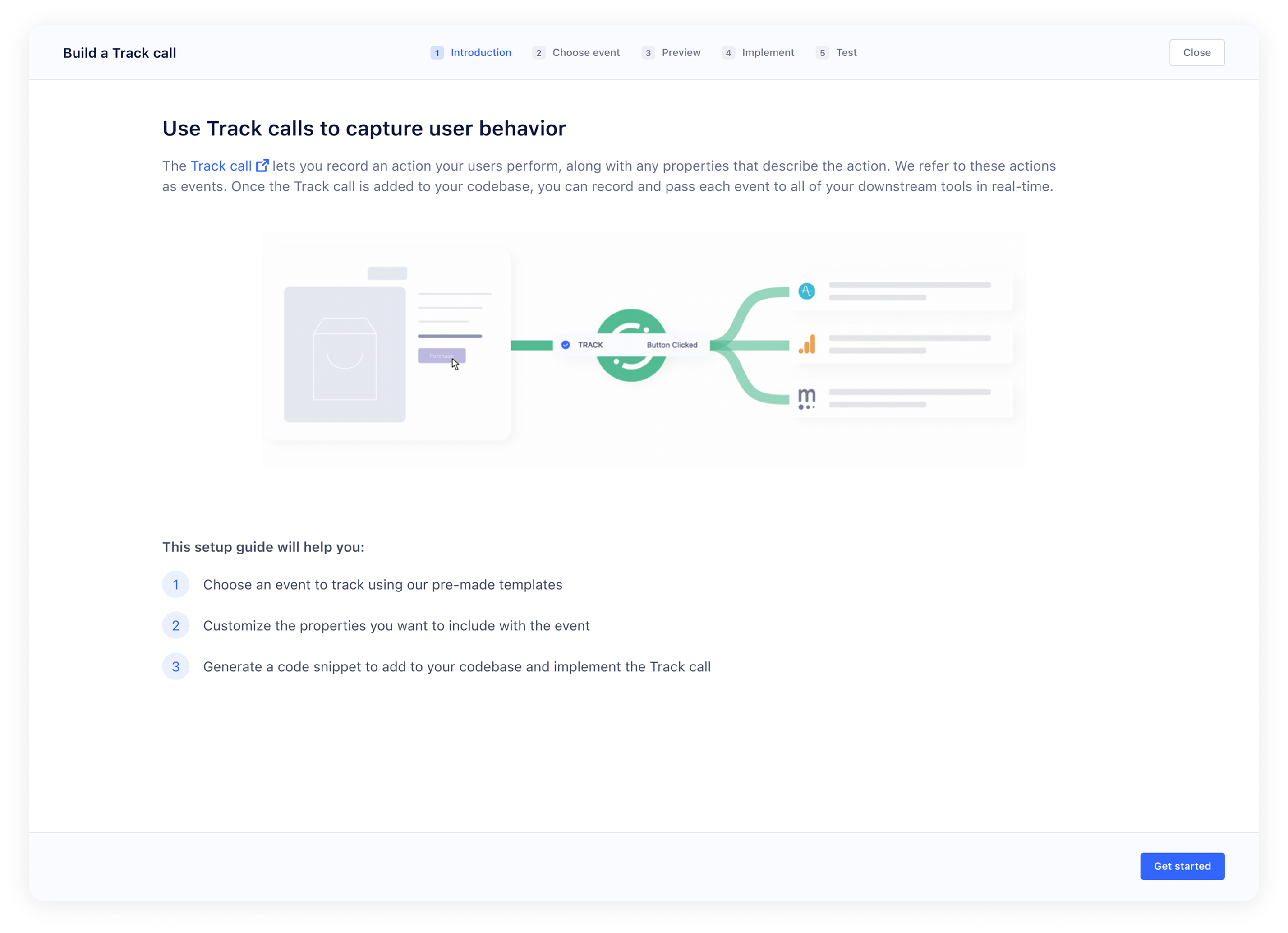
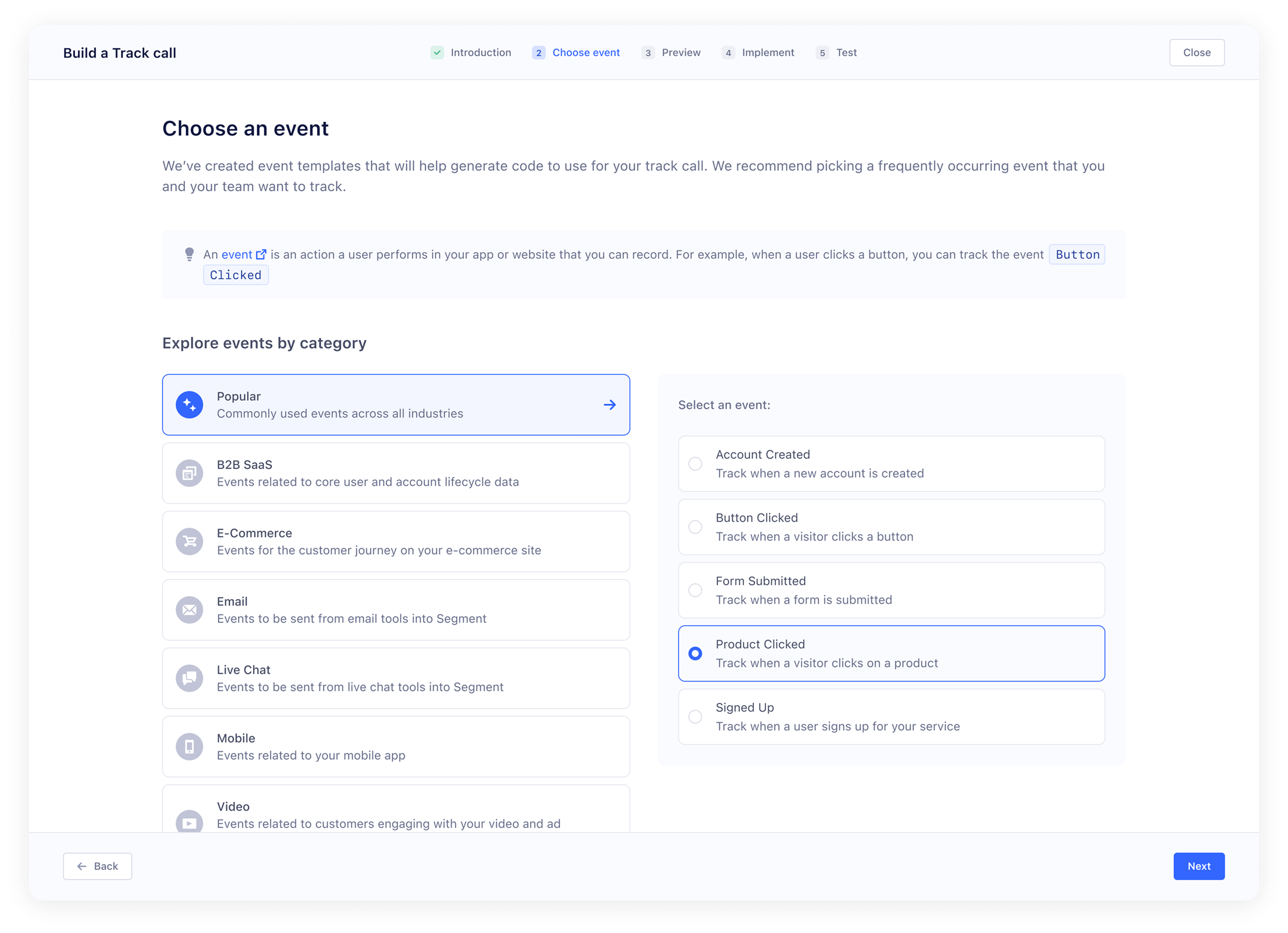
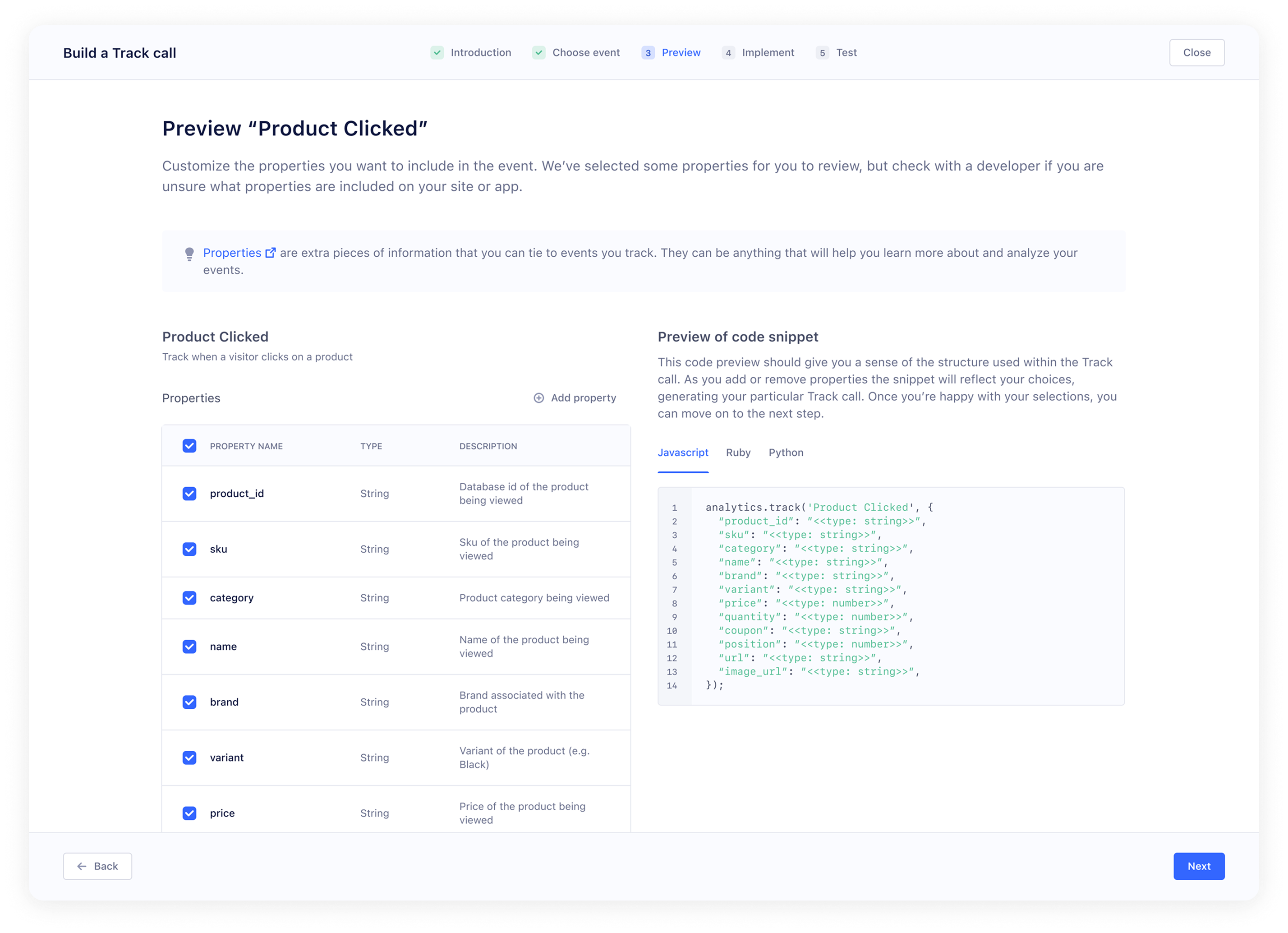
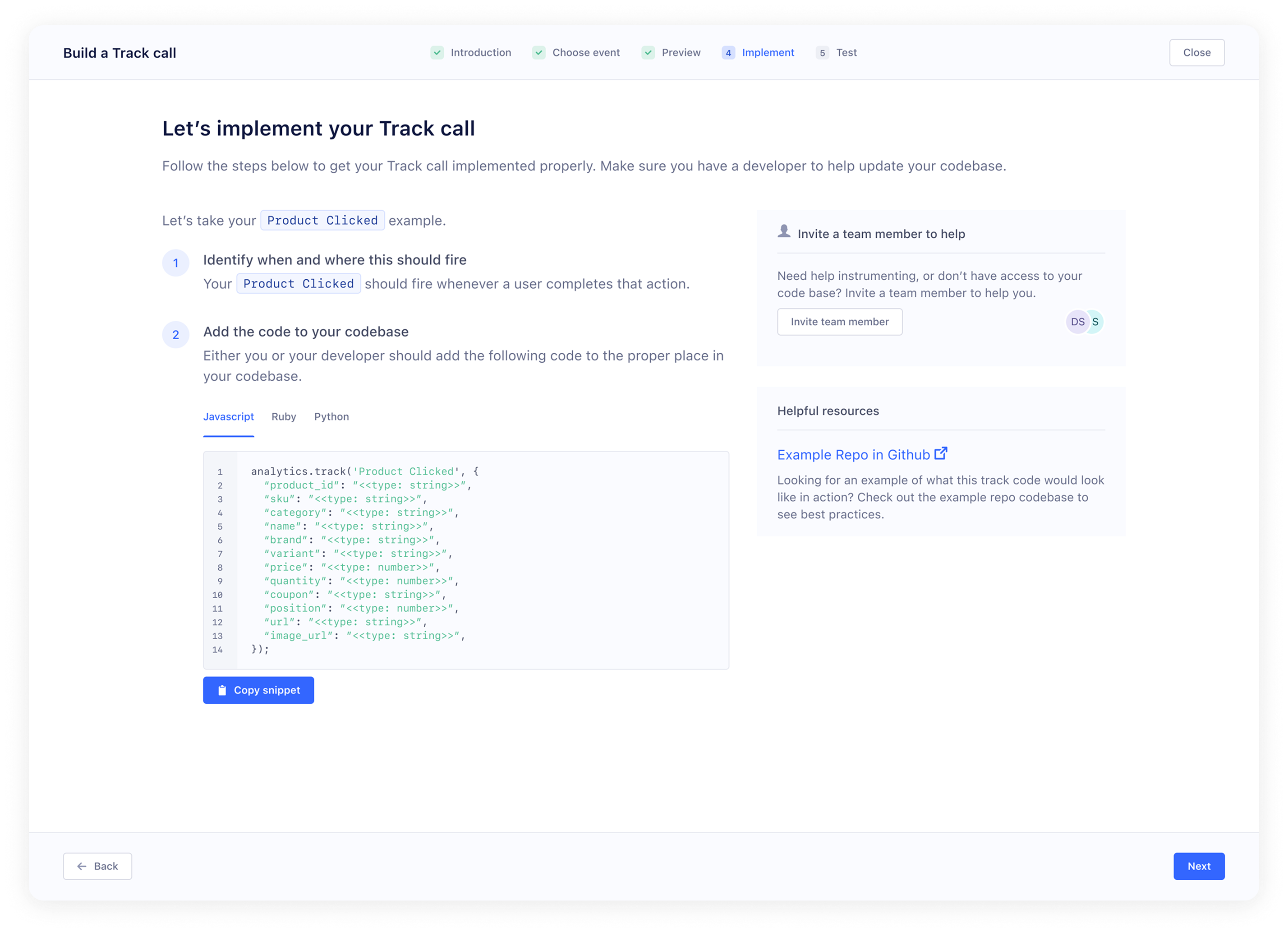
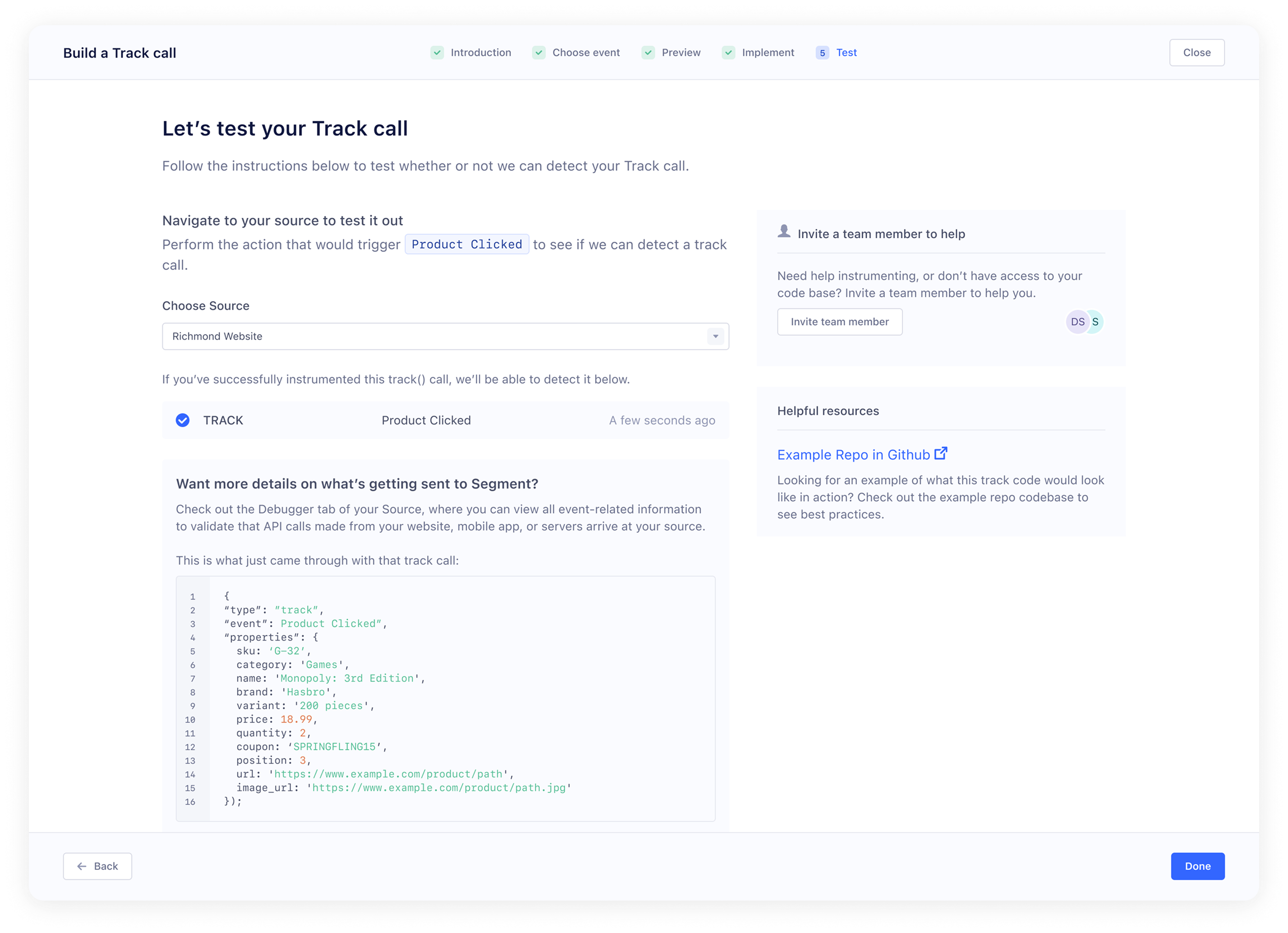
I designed an opinionated, step-by-step in-product experience that walks customers through creating and validating their first Track or Identify call.
The flow was intentionally framed as interactive documentation: designed primarily for business users, while still supporting technical teammates so teams could make progress before involving engineers.
Impact
of users who entered the flow successfully sent their first Track call
of users who entered the flow successfully sent their first Identify call
Additional impact:
- Reduced reliance on documentation and human support during onboarding
- Established a scalable pattern for future in-app education experiences