Helping new users implement Segment faster
Providing self service users with step-by-step onboarding that helps them implement correctly and grow over time
This is just a brief overview of this project. Contact me for a full case study.
Overview
Led the design of a step-by-step onboarding guide that helps self-serve users implement Segment correctly from day one, laying a foundation for their long-term growth with Segment and improving activation.
The problem
Implementing Segment is complex and ambiguous, especially for self-serve users who don't have access to dedicated support. As a result, many users either set up Segment incorrectly or never fully complete onboarding. This hurts activation, retention, and future upsell opportunities.
Onboarding focused on connecting sources and destinations, but offered little guidance on data strategy or best practices. Users often discovered implementation issues later on, when rework became costly and frustrating.
My role
Lead designer owning the end-to-end experience, from problem framing through launch and iteration. At project kickoff, my PM went on paternity leave, so I shared PM responsibilities with my engineering manager to help shape strategy, prioritize scope, and align the team during early discovery.
The solution
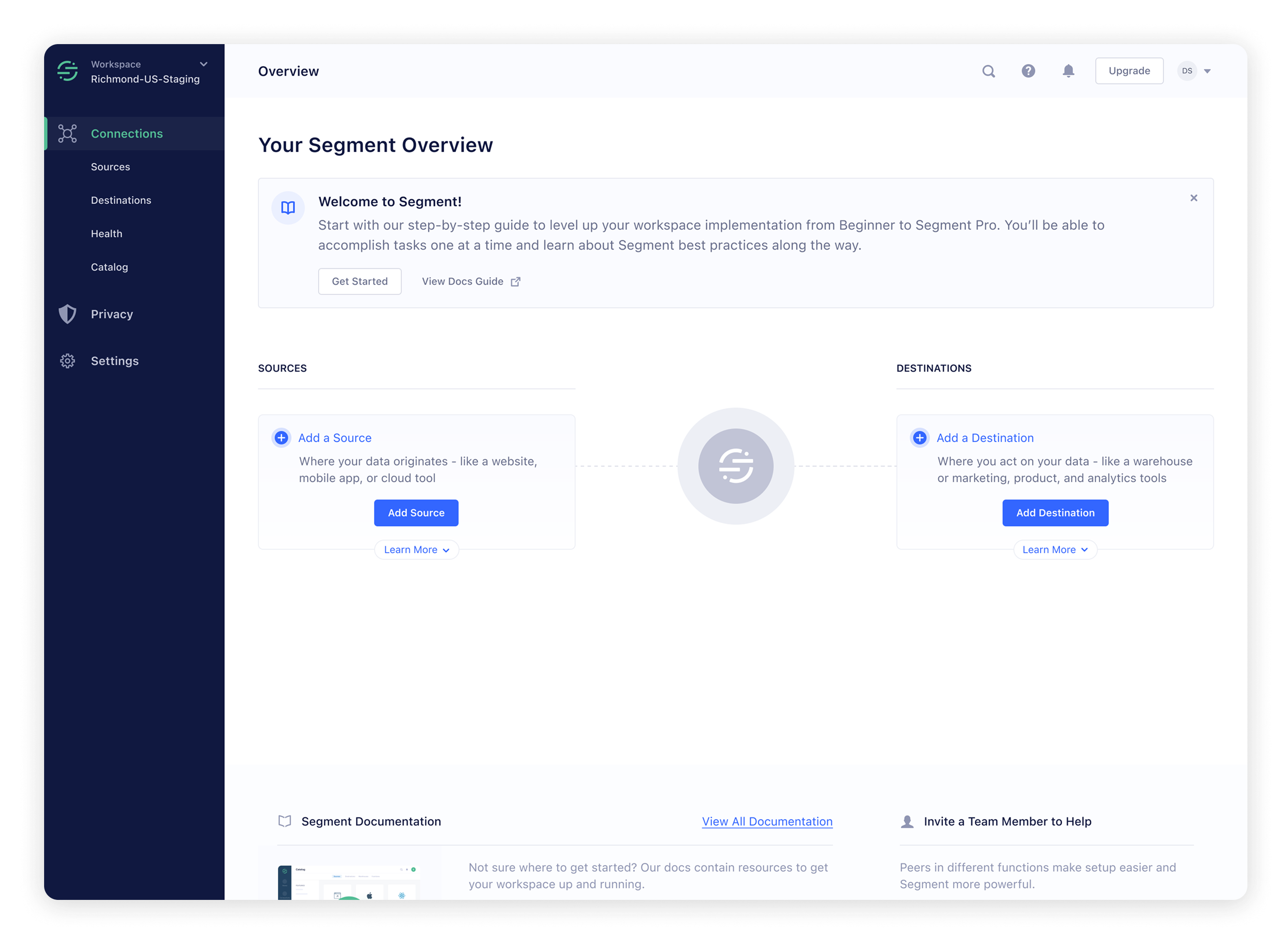
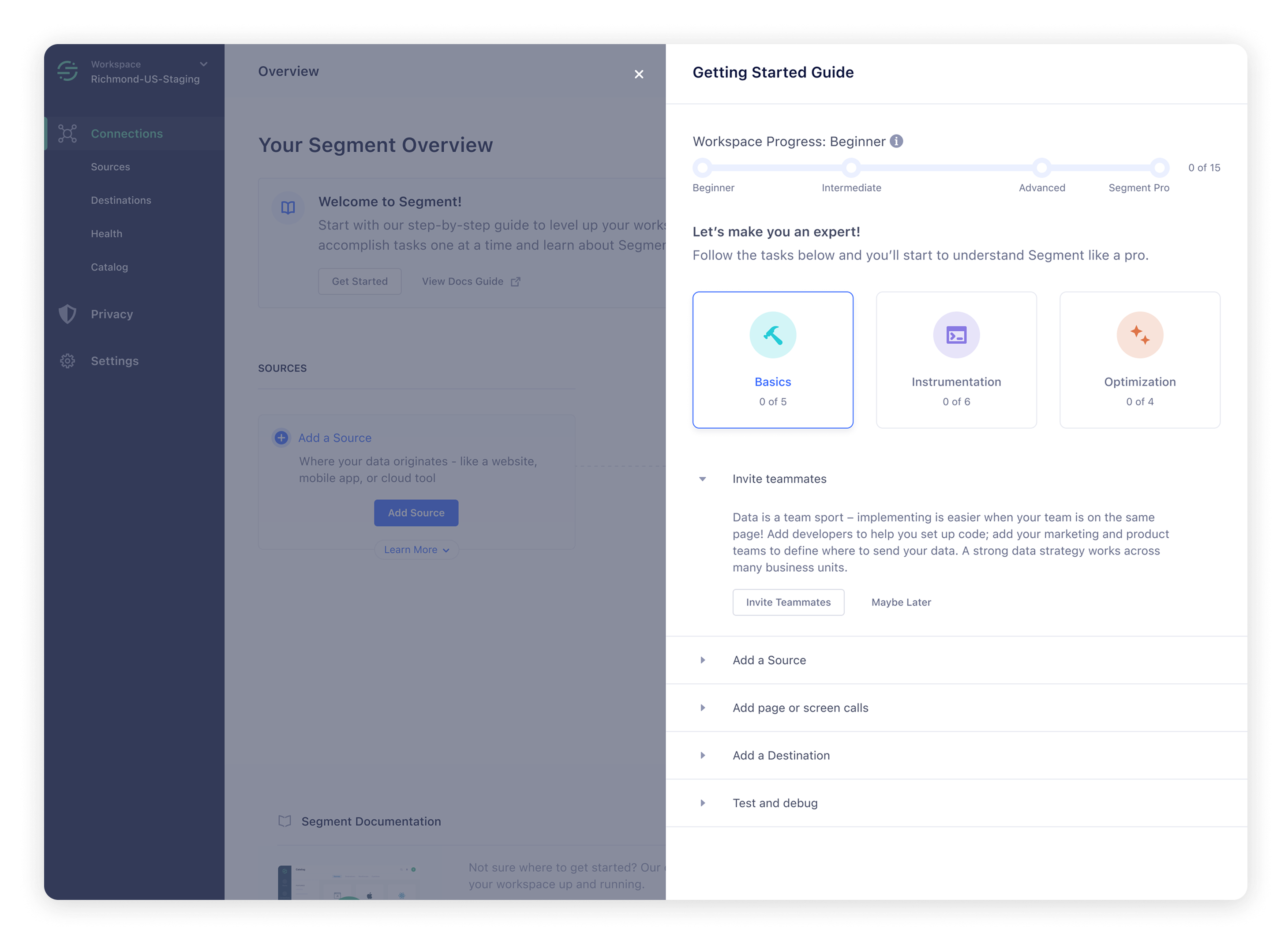
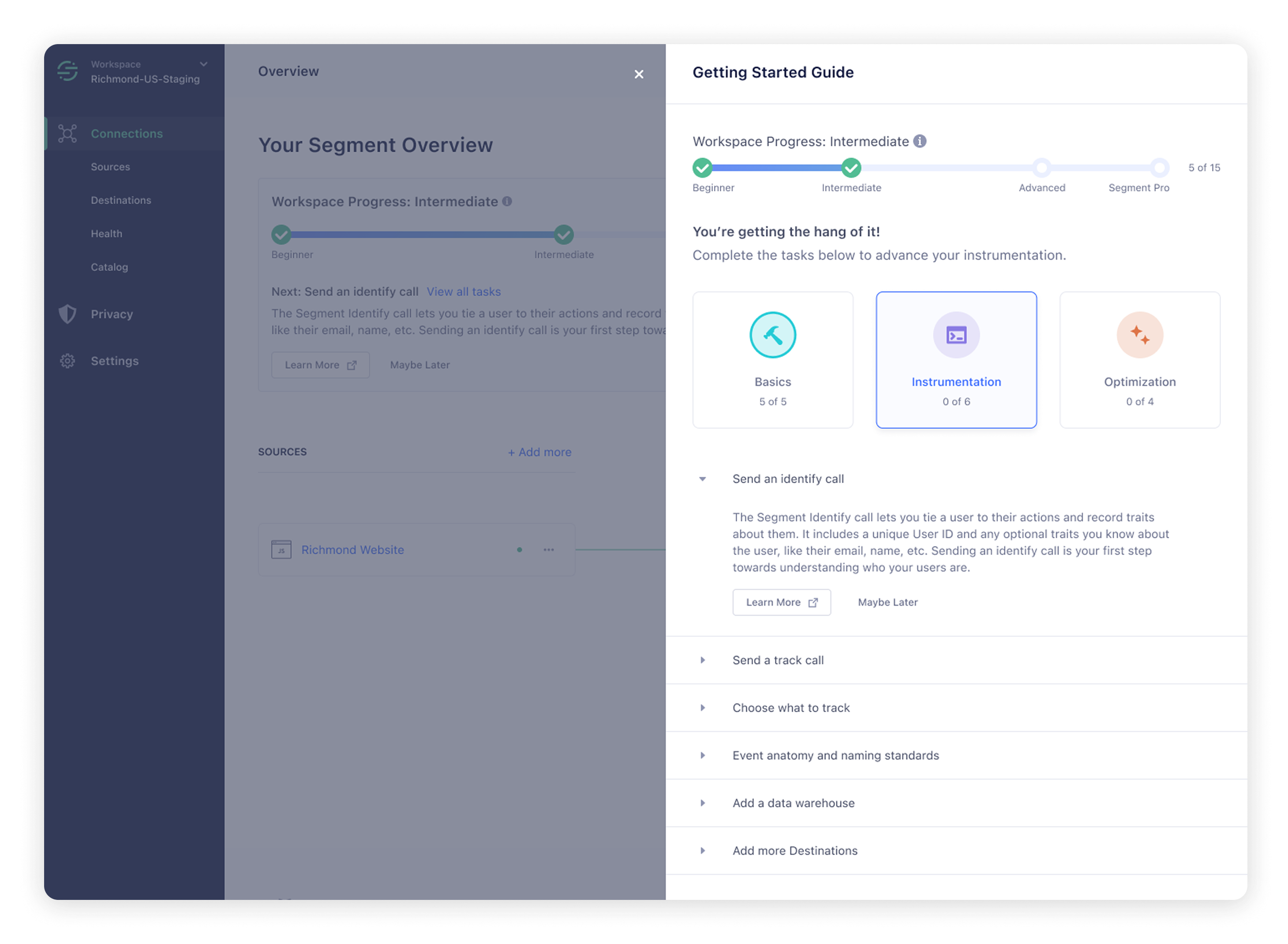
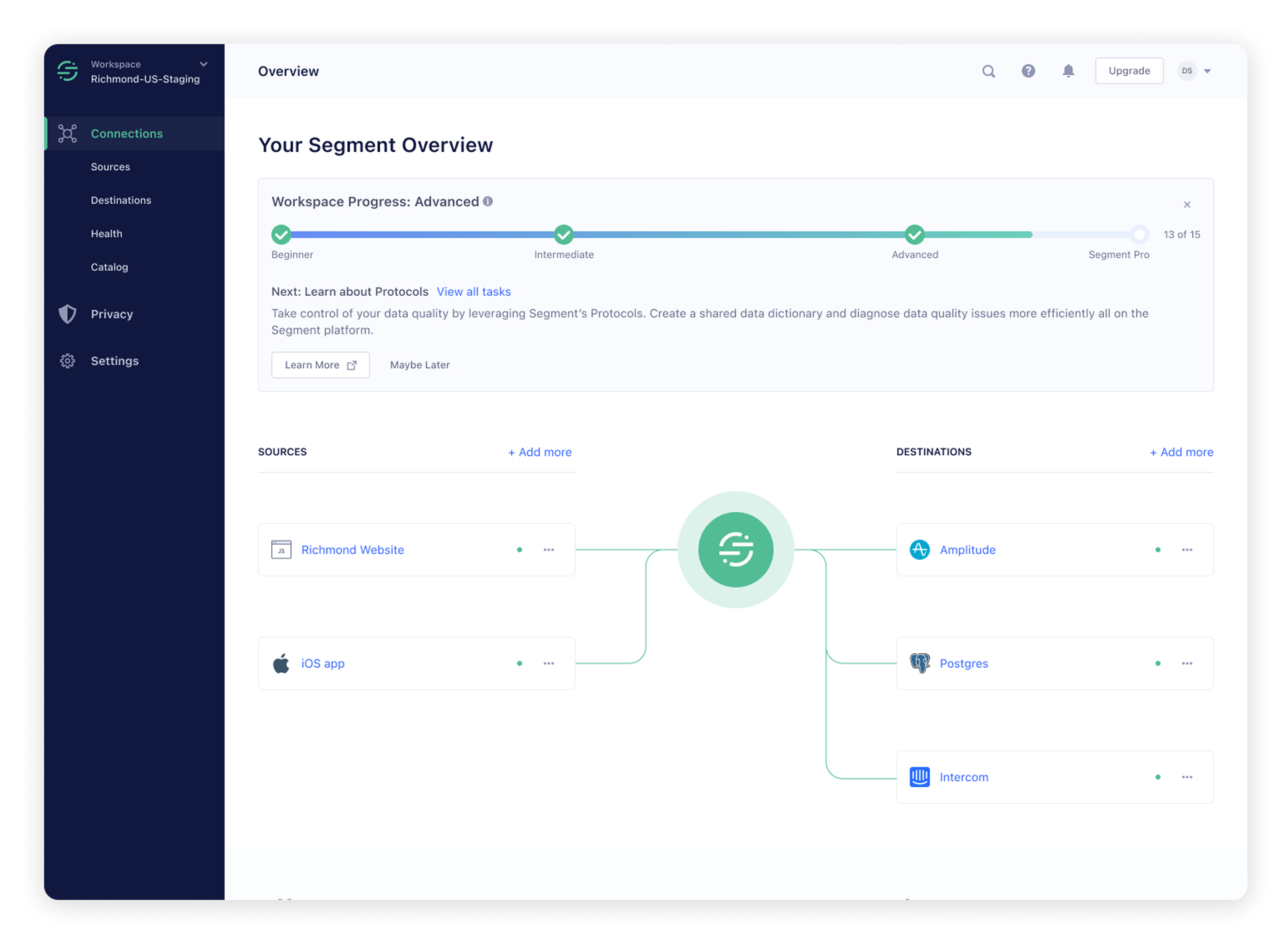
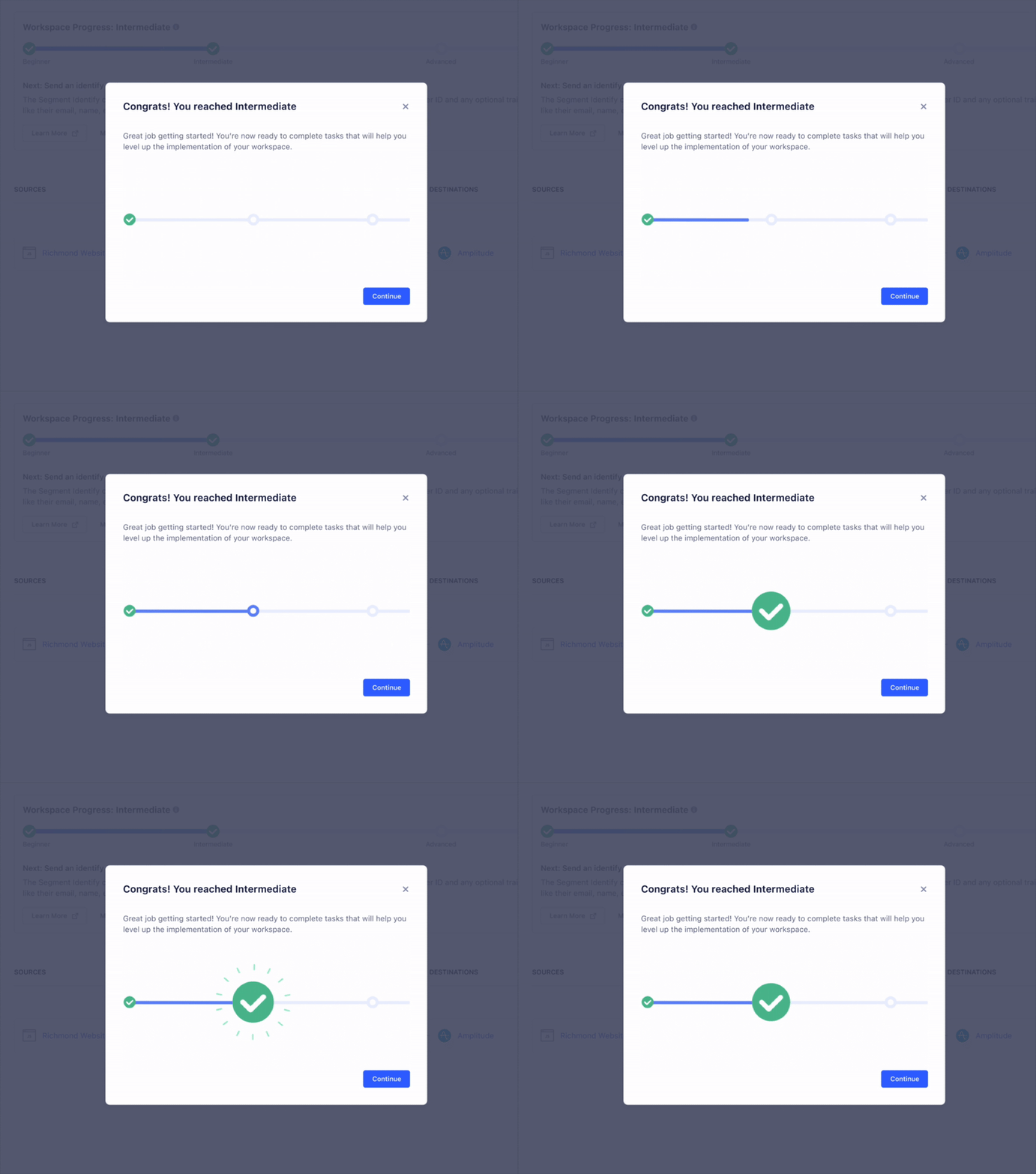
I designed a step-by-step, in-product Getting Started Guide that mirrors a customer's real implementation journey by becoming more advanced as their data maturity grows.
The guide combines:
• Clear, action-oriented tasks customers can complete in-product
• Contextual explanations of why each step matters
• Linked documentation used intentionally
• Lightweight progress and motivation cues to encourage follow-through
A key insight from research was how much friction customers experienced moving between documentation and the product. That learning fundamentally shaped the experience and influenced how teams across the org thought about what belonged in-app versus in docs.
Impact
- Established a stronger foundation for self-serve implementation and onboarding
- Early activation metrics trended in the right direction, informing follow-on investments
- Directly influenced subsequent work, including deeper in-app guidance for Track and Identify
- Created a scalable onboarding framework the team could continue to build on
- While overall activation gains were modest at launch, the guide unlocked clearer learnings, sharper hypotheses, and a more incremental path forward.